-
How Operational Assessments Prevent Post-Merger Failure
Financial due diligence confirms the historical numbers, but most acquisition failures stem from operational friction discovered after the close. Evaluating management depth, supply chain vulnerabilities, and customer concentration risks reveals whether a target can actually support projected growth. Understanding these operational gaps early directly shapes valuation and post-merger integration planning: bit.ly/due-dilig…
#Consulting #Operations #Strategy #BizOps

-
The 13-Week Cash Window:
Turnarounds usually fail because distress is normalized quarter by quarter, explaining away stretched vendors and maxed credit lines until liquidity disappears. Real stabilization follows a strict triage sequence: securing liquidity through a 13-week forecast, fixing margin, and restructuring costs in that exact order. It requires on-site execution rather than high-level slide decks. The breakdown of this operator-led framework is detailed here: bit.ly/business-…
#Turnaround #CashFlow #Restructuring #CFO

-
Measuring Real Output per Paid Hour to Offset Rising Labor
Macro averages like the BLS reporting $37.75 average hourly earnings offer zero actionable guidance for an individual firm facing rising labor costs. Practical productivity consulting ignores national aggregates to measure output per paid hour by specific function, establishing an internal baseline and stripping out process waste. The engagement stays through implementation until each dollar of payroll produces measurable output gains: bit.ly/productiv…
#Manufacturing #ProcessImprovement #Workflow #Management

-
How to Scale Enterprise AI from Initial Pilots to Governance
Most organizations stall on AI because they treat it as an isolated tool rollout instead of a staged capability problem, ending up with abandoned experiments and no working systems. Moving systematically from experimentation into pilots, full deployment, and governance requires meeting distinct operational criteria at each phase. We broke down the four-stage framework and the exact stall points to watch for: bit.ly/ai-adopti…
#AIStrategy #Management #Leadership #TechStrategy

-
Why Most Sales Training Fails Without Continuous Coaching Infrastructure
Without reinforcement, sales reps forget between 80% and 85% of training material within 90 days. The breakdown rarely stems from the curriculum itself, but from an event-based delivery model that lacks ongoing accountability. A pragmatic sales training consultant starts with a diagnostic of the revenue gap and establishes the coaching infrastructure needed for actual adoption: bit.ly/sales-tra…
#Sales #SalesEnablement #SalesLeadership #B2BSales
-
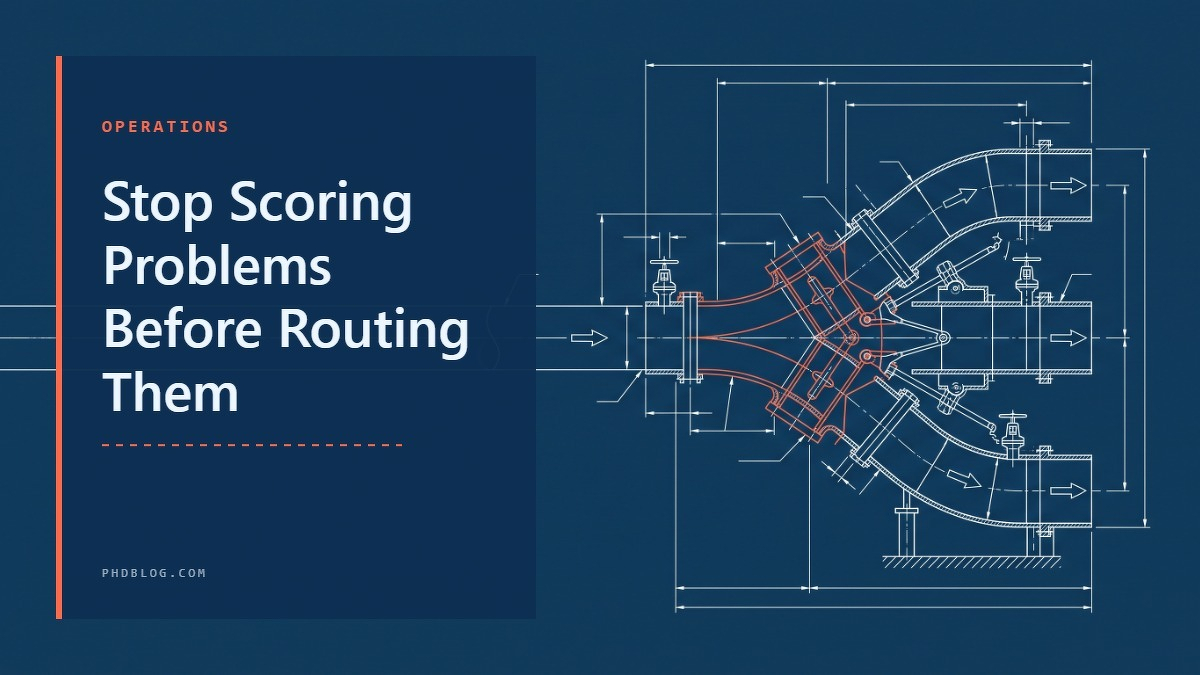
How to Route Operational Problems to
Before running an assessment instrument, you have to decide which one applies. The Business Diagnostic acts as an upstream intake layer across the hub, translating plain-language operational situations into recognizable patterns without scoring them. It routes the owner to the proper system before measurement begins, ensuring you diagnose the actual problem rather than misapplying a framework: bit.ly/business-…
#Operations #Consulting #Management #Strategy
-
Tying Funding Gates Directly to Operating Evidence
Capital allocation fails when teams move the goalposts mid-flight to justify ongoing spend. Module 8 of the VWCG OS automates governance by tying funding gates directly to core operating assumptions. If a metric like CAC or integration timeline breaks twice consecutively, the tranche freezes automatically, while weak financial discipline scores shift exception approvals straight to the board. The mechanics of running this financial control layer are detailed here: bit.ly/agile-cap…
#Operations #CFO #PrivateEquity #Finance
-
Cut cargo insurance costs by bringing your own loss data
Cargo insurance is typically a carrier’s largest expense after fuel and equipment, yet many operators enter renewals without auditing their own loss runs. Underwriters price policies using claim histories, commodity mix, and open reserves, all of which come directly from carrier records. Entering negotiations without that data leaves you accepting broker terms shaped by stale reserves rather than actual risk. See how a loss run diagnostic establishes the baseline numbers before renewal: bit.ly/cargo-ins…
#FleetManagement #RiskManagement #Transportation #SupplyChain

-
An open-access operations guide answering
Operational advice for small businesses is too often buried under narrative filler and lead generation funnels. This 177-page reference document cuts past that model, laying out answers to 1,000 concrete operational questions across 100 distinct U.S. SMB sectors, ranging from trade services to dental clinics and law firms. It is completely ungated, offering direct utility for operators and advisors who need pragmatic benchmarks without a sales pitch: bit.ly/most-busi…
#SmallBusiness #Operations #HVAC #LawFirm
-
Business Diagnostic: The Intake Layer | Operational Systems
Most assessment architectures fail before they start because they jump straight into scoring without triaging the problem. The Business Diagnostic functions purely as an intake layer upstream of measurement, reading a plain-language operational situation to identify the underlying pattern. Instead of scoring, it determines which instrument should run first so teams stop evaluating the wrong friction points. See how the intake layer routes operational systems at phdblog.com/business-…
#Operations #BusinessOps #Management #Workflow

-
Succession Planning | SMB Advisor
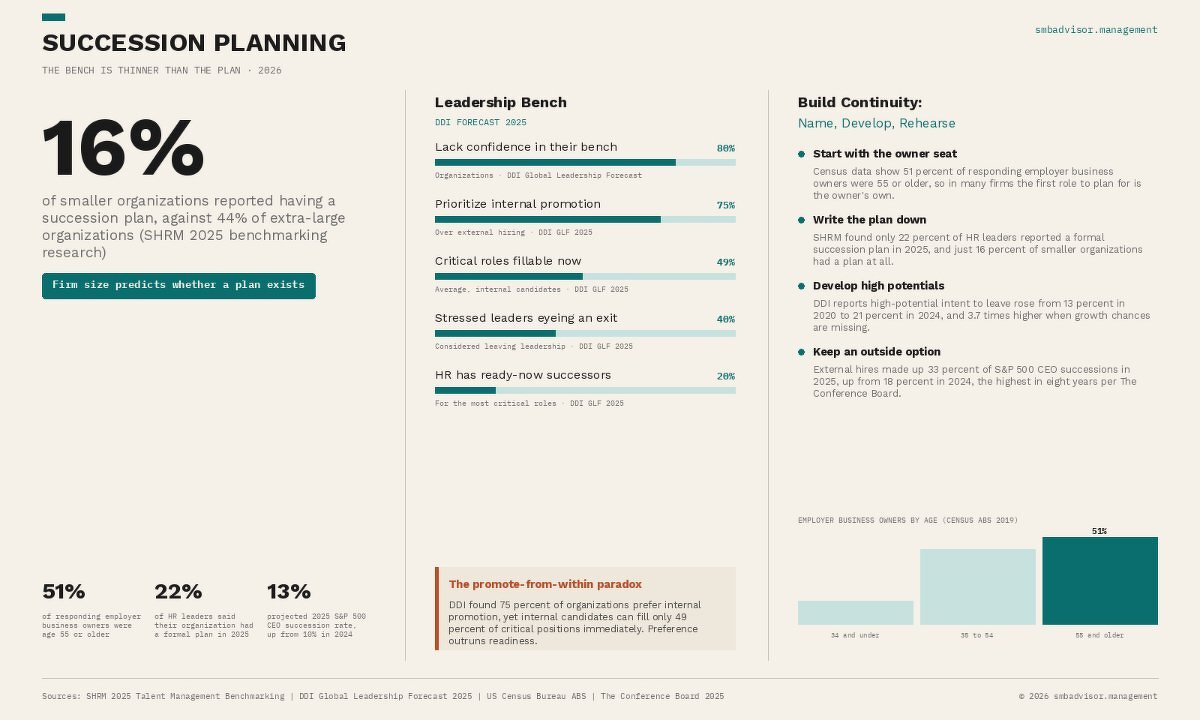
SHRM benchmarking shows only 16% of smaller organizations maintain a formal succession plan, compared to 44% of enterprise firms. The businesses with the least operational slack remain the least prepared when a critical role falls vacant. Addressing that exposure starts with identifying essential seats and developing real bench depth before an exit forces the issue: smbadvisor.management/successio…
#Leadership #SmallBusiness #TalentManagement #HR
-
5,497 Written One- and Two-Star Google Reviews of High-Review-Count Gyms and Fitness Clubs in Eight US Metros
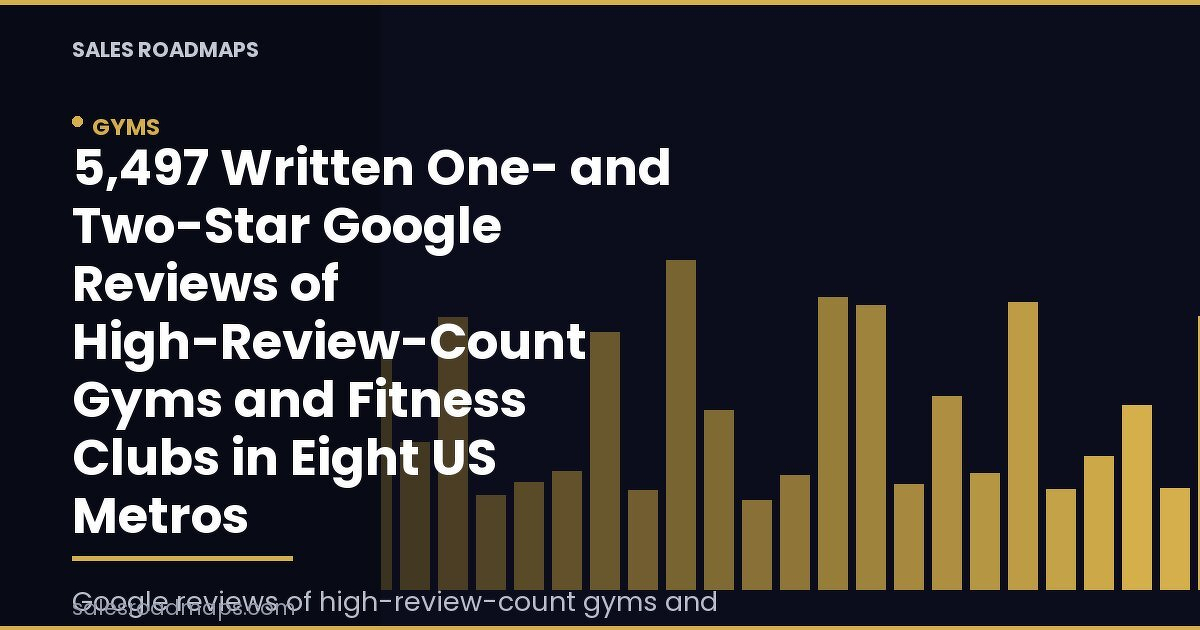
Operators often assume member dissatisfaction stems from broken machines or aging facilities, but operational execution drives the overwhelming majority of public complaints. An analysis of 5,497 one-star and two-star Google reviews across eight US metros classified 80.1 percent as issues with how the business is run, compared to just 19.0 percent concerning equipment and physical facilities. For fitness leaders, administrative friction and staff interactions clearly pose a far greater reputational risk than equipment age: salesroadmaps.com/gym-negat…
#GymOwners #FitnessBusiness #Operations #CustomerExperience
-
Microsoft Copilot for Business | SMB Advisor
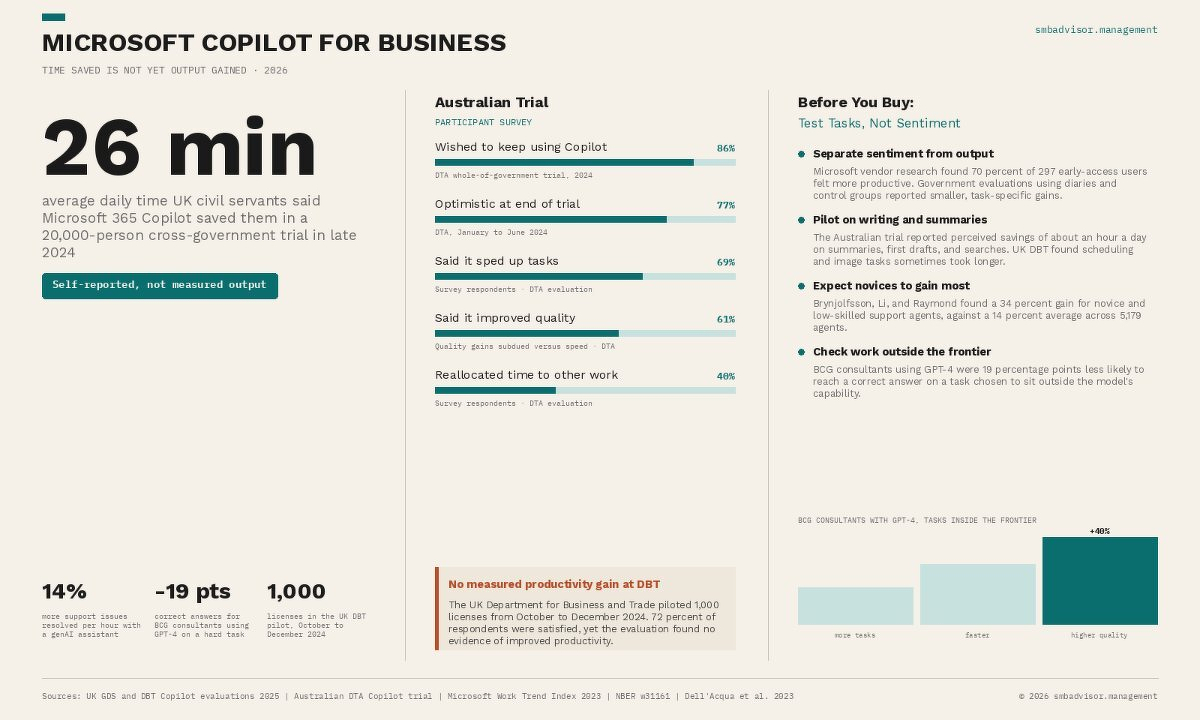
In a 20,000-person UK civil service trial, staff self-reported saving 26 minutes a day with Microsoft Copilot, yet one department found no measurable productivity gain. That gap highlights the critical difference between subjective convenience and verifiable business output. Before committing to the per-seat add-on cost, examine what the deployment data actually shows: smbadvisor.management/microsoft…
#GenerativeAI #Productivity #GovTech #Operations
-
Why consultant hourly rates hide the real cost of undefined
Hourly rates are usually the first metric buyers compare, but two firms quoting identical numbers can easily produce final invoices that differ by a factor of three. The largest financial leak sits upstream of the billable hour, driven by the cost of hiring help for a problem leadership has not clearly defined. Because price always follows scope, controlling advisory spend requires tightening the diagnosis long before anyone signs a proposal: bit.ly/business-…
#Advisory #B2B #BusinessStrategy #ProfessionalServices
-
Where small business contracts leak value, and the tools that
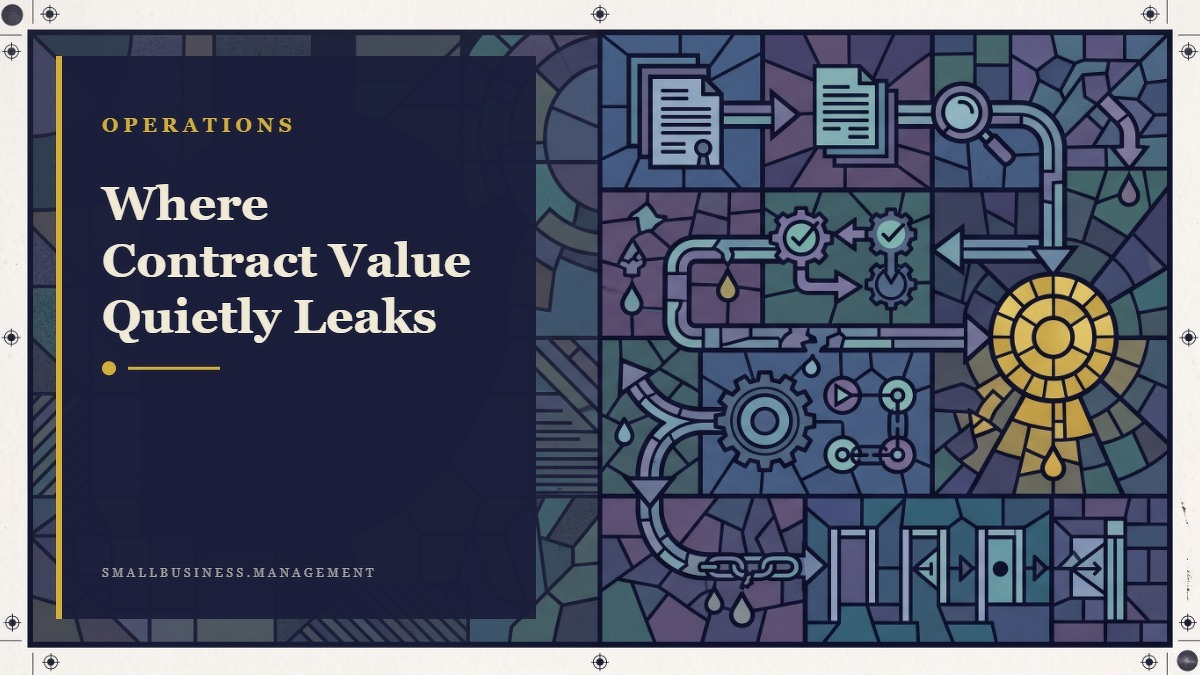
Most contract value erosion in small operations happens quietly across handoffs, from drafting oversights to missed renewal dates. This breakdown maps where revenue leaks by stage, includes an exposure calculator to quantify your real financial risk, and compares practical contract management platforms suited for leaner teams. Review the analysis and tooling options here: bit.ly/contract-…
#LegalOps #Procurement #Operations #ContractManagement
-
, no em/en dashes or spaced hyphens,
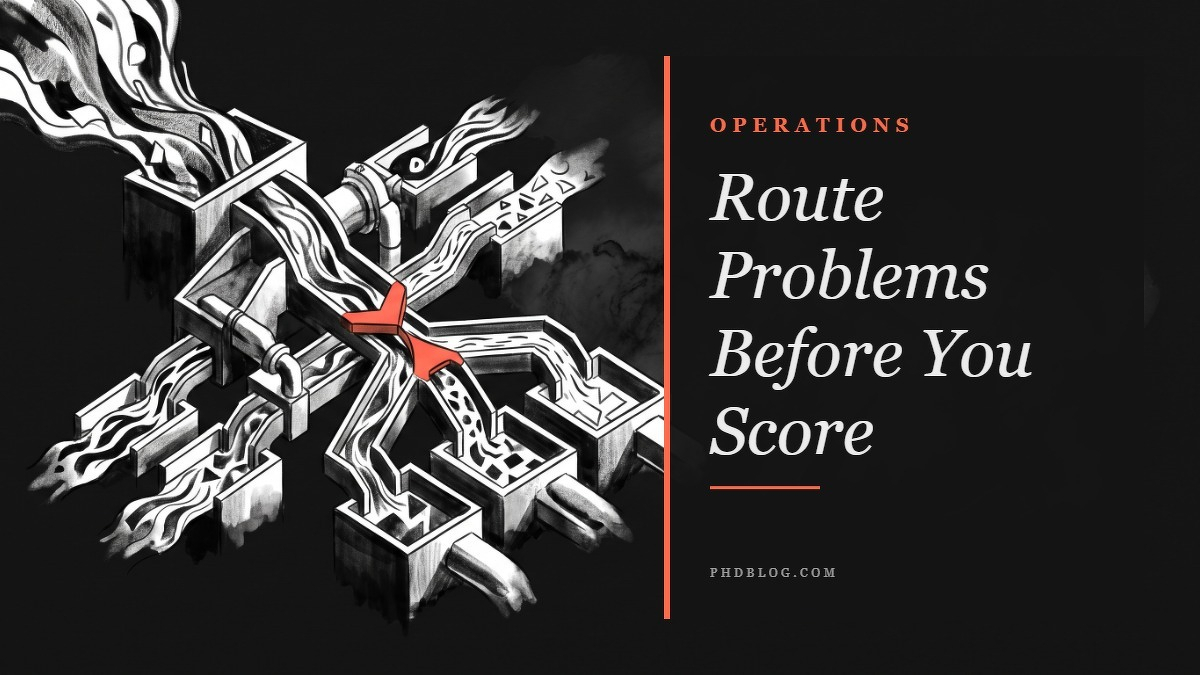
Most operational frameworks fail at the front door because leaders run an assessment before diagnosing the actual problem. The Business Diagnostic serves as an intake layer upstream of any scoring, translating plain-language descriptions into recognized operational patterns to determine which instrument runs first. It separates pattern recognition from measurement so teams stop applying the wrong tools to structural friction. Read how the routing layer works: bit.ly/business-…
#Operations #BusinessStrategy #Management #Consulting
-
Building a Sales HR Engine: From
When revenue targets miss, leadership usually blames pipeline, but the shortfall often started months earlier as a people operations delay. A proper HR operations roadmap treats sales hiring and onboarding as core operational dependencies, sequencing role scorecards, structured interview loops, 30-60-90 onboarding, ramp milestones, and compensation administration. Mapping these milestones directly to the revenue forecast ensures you have productive sellers when the plan demands them: bit.ly/hr-operat…
#SalesOps #SalesEnablement #RevenueOperations #HumanResources

-
SWOT Analysis: Why Generic Lists Replace Real Decision-Making - YouTube
Most SWOT exercises degrade into brainstorming sessions that produce generic quadrant lists rather than concrete trade-offs. Without an operational framework tied to resource allocation, teams end up cataloging obvious observations instead of determining what to execute. This short critique outlines why the standard format stalls practical strategy: www.youtube.com/shorts/zu…
#Strategy #Operations #Management #Consulting

-
Restaurants (independent) Operations Questions | 10 Diagnostics Answered
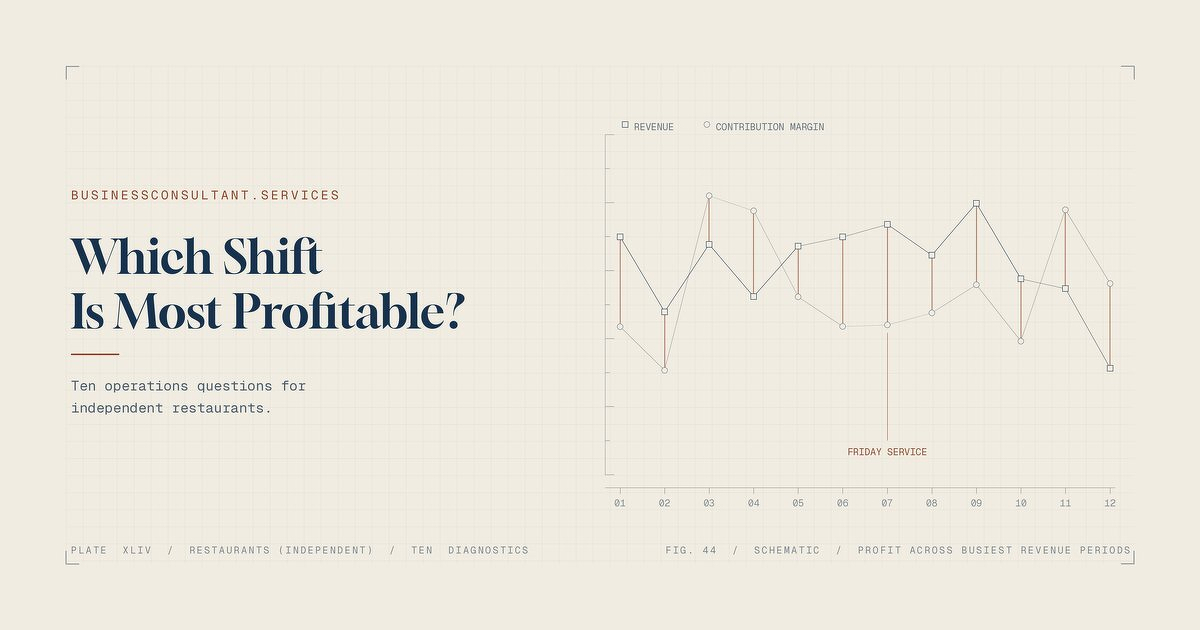
In independent restaurants, peak volume often masks margin erosion: Friday revenue climbs while net profit drops, and the highest-rated dishes frequently carry the lowest contribution margins. Treating table-time as the true capacity unit helps isolate real yield from vanity cover counts, especially when evaluating slow-shift labor spikes or lingering regulars. These ten diagnostics walk through the operational fixes: businessconsultant.services/small-bus…
#RestaurantOwner #Hospitality #FoodService #Restaurateur
-
Shadow AI: Risks and Response for SMBs | VWCG Blog
More than 60% of knowledge workers regularly use unsanctioned AI tools, often pasting customer data into free chatbots to get work done faster. This is not a discipline problem, but a leadership vacuum where teams adopted efficiency tools before the company set a policy. Addressing shadow AI requires practical guardrails and sanctioned alternatives rather than blanket bans. We outlined a response plan for growing businesses here: vwcg.app/blog/shad…
#SmallBusiness #Leadership #Operations #Management
-
Law firms (solo/small) Operations Questions | 10 Diagnostics Answered
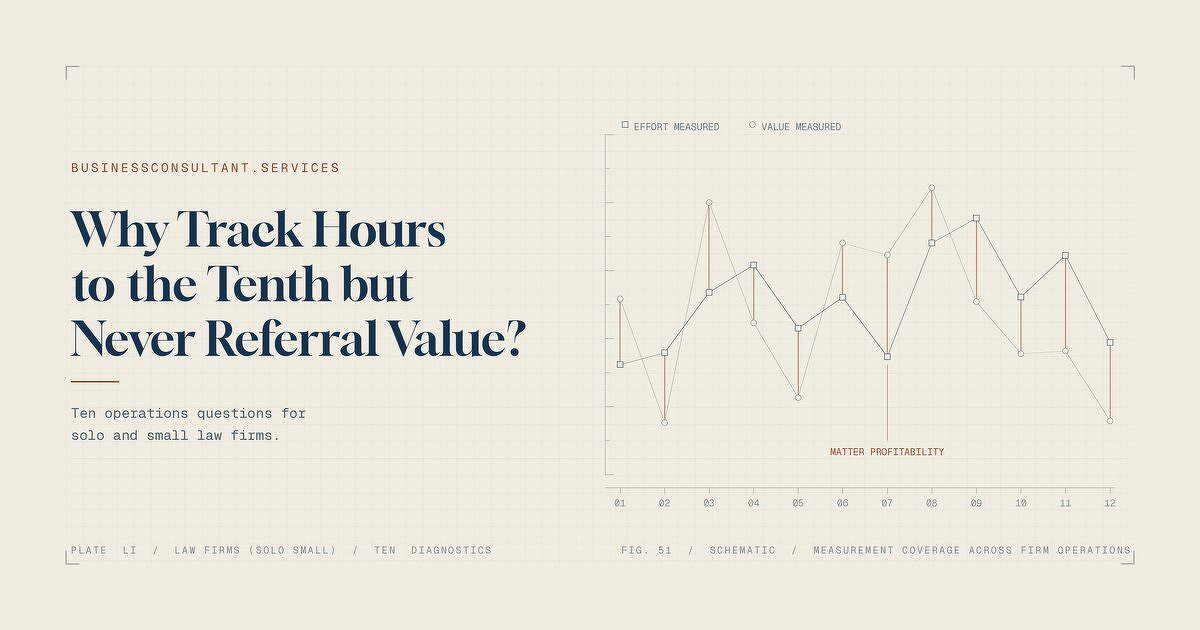
Most small law firms measure effort obsessively while leaving value unmeasured, tracking tenths of billable hours while referral conversion and margin leakage go unnoticed. Shifting to flat-fee matters without a formal scope specification and change-order trigger simply hides scope creep until realization collapses. Here are ten diagnostic answers addressing how legal practices can rebuild their measurement systems and protect matter profitability: businessconsultant.services/small-bus…
#LegalOps #LawFirm #LawPractice #SoloLawyer
-
Roofing Operations Questions | 10 Diagnostics Answered
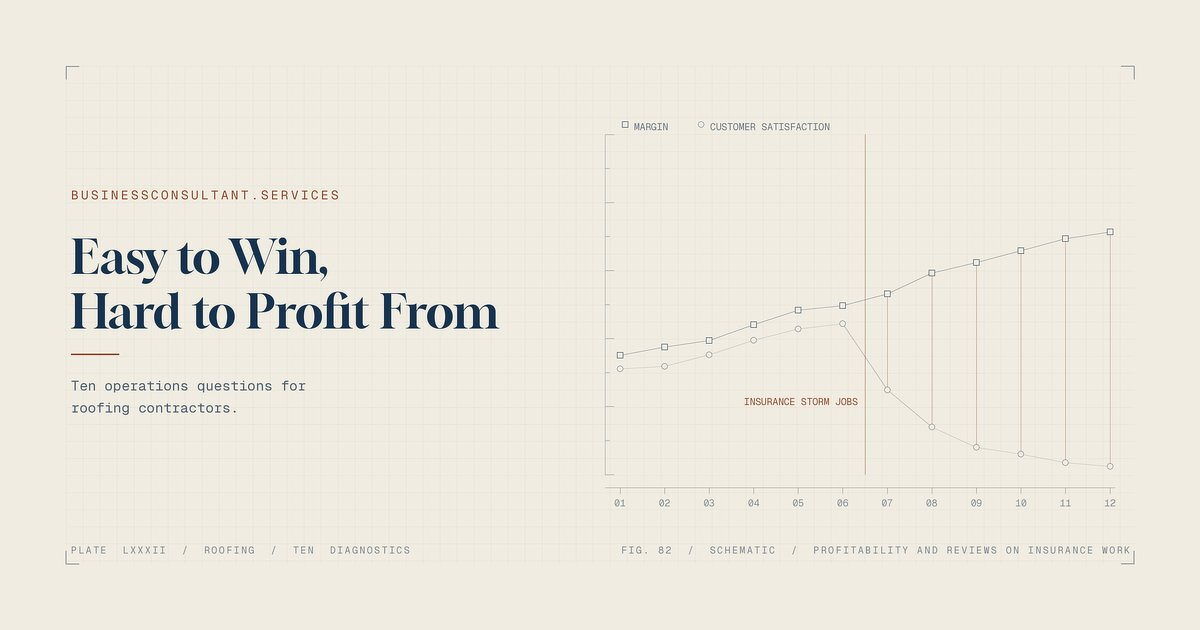
In roofing, storm demand is easy to win but notoriously hard to profit from. Insurance jobs close fast yet produce thin margins and administrative drag, largely because retail reputation does not transfer into adjuster-driven claim work. These ten operational diagnostics separate documentation failures from segment mismatch to show where revenue leaks: businessconsultant.services/small-bus…
#Roofing #RoofingContractor #ContractorLife #SmallBusiness
-
5,497 Written One- and Two-Star Google Reviews of High-Review-Count Gyms and Fitness Clubs in Eight US Metros
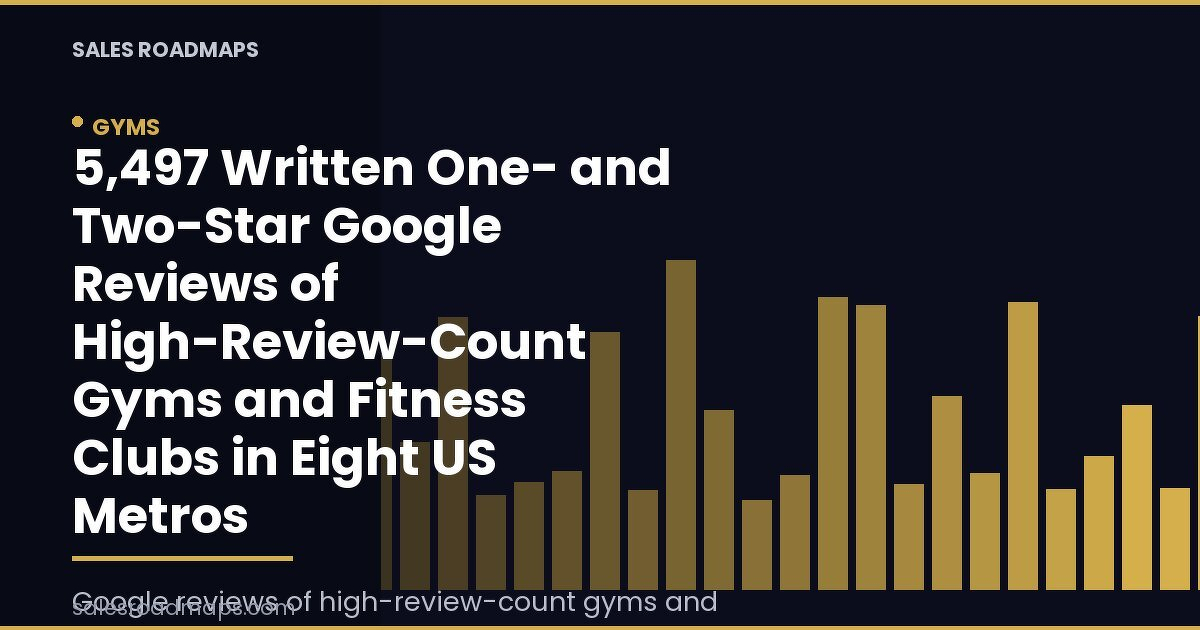
An analysis of 5,497 one- and two-star Google reviews across high-volume gyms in eight US metros shows that poor ratings rarely come down to equipment. A language model classified 80.1 percent of complaints as issues with how the business is run, while only 19.0 percent cited the facility or machinery itself. For operators, customer dissatisfaction is overwhelmingly an operational and management problem rather than a capital expenditure issue. Read the full dataset and breakdown at salesroadmaps.com/gym-negat…
#GymOwner #FitnessBusiness #GymOps #CustomerExperience
-
Criminal Background Check for Employees
Running background checks without matching the screening scope to specific roles exposes companies to compliance liability and unnecessary costs. Different positions require distinct search depths, from county courthouses to federal records, while state-level regulations strictly limit how employers can act on the findings. Read the operational breakdown on selecting the right check types and navigating legal restrictions at smallbusiness.management/criminal-…
#Hiring #HR #Compliance #PeopleOps
-
How to Choose a Business Consultant | What They Actually Do
Most founders seek consulting help when a specific symptom appears, like flat revenue or a process that broke after scaling past $5M. The visible issue is rarely the root problem. Drawing from work with companies between $2M and $100M, this framework outlines the six core operational patterns that stall growth and explains how to select an advisor who solves systemic constraints rather than surface symptoms. Read the methodology: businessconsultant.services/methodolo…
#BusinessStrategy #Leadership #ScaleUp #SmallBusiness
subscribe via RSS